
The Moment You Notice It
You're backing the car out, half-thinking about your to-do list, when the door makes that sound. Not a quiet hum — a grind, a squeal, or a jerky little hitch right before it clears the frame. Or maybe you walked past the garage and saw a thin, curled piece of metal wire sitting on the concrete like it fell off something important. It did.
One of you says, 'It's fine, it's been doing that for months.' The other says, 'That's exactly the problem.' You're both kind of right, which is why this keeps coming up. Here's what's actually going on, so you can settle it with facts instead of volume.
Two Different Parts, Two Different Problems
Your garage door relies on a handful of components most people never think about until they fail: springs that do the heavy lifting, cables that transfer that force to the door, and rollers that let the door glide along its track. Springs get all the attention because they're dramatic. Cables and rollers fail quieter — until they don't.
Worn Rollers: The Grinding and Shuddering
Rollers are the small wheels, usually at each lower corner of every panel, riding inside the metal track. Over years of openings and closings, they wear down. In this climate, that wear happens faster — afternoon humidity swells wood and composite parts, salt air pits steel rollers and fasteners near the coast, and sand or grit tracked in from outside works into the roller bearings like sandpaper.
Signs of worn rollers:
- A grinding or squealing noise as the door moves, especially near the top or bottom of travel
- Visible wobble or shudder in the door as it opens
- Flat spots or cracks on plastic/nylon rollers you can see from inside the garage
- The door looking slightly crooked in the track when fully closed
Worn rollers are annoying and they accelerate wear on the track and opener, but they're rarely an emergency. They're a maintenance item — the kind of thing a tune-up catches before it turns into something worse.
Frayed Cables: The One That Should Worry You
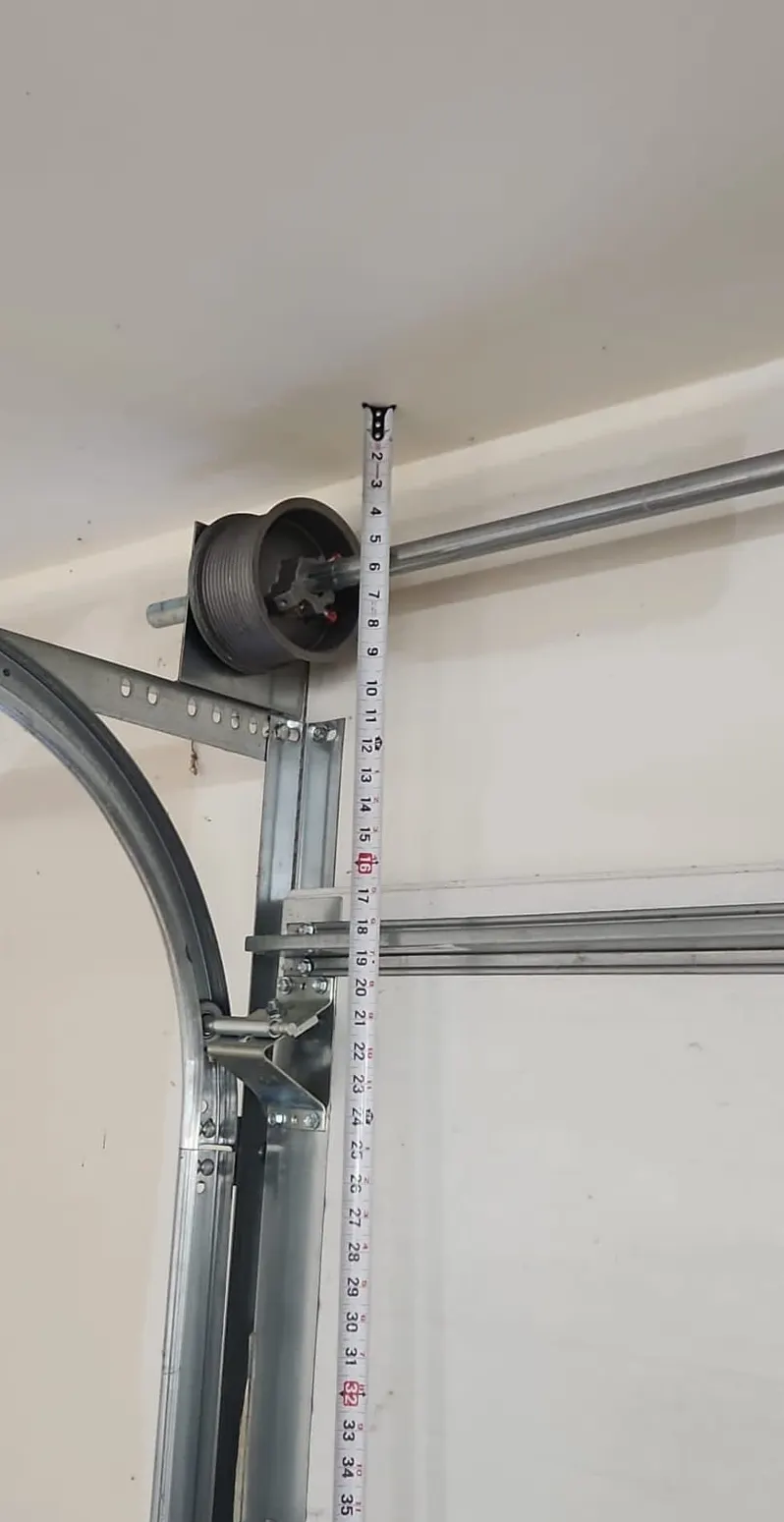
The cables are a different story. These are the steel lines that run from the bottom brackets of the door up to the drum near the spring system. They're under constant, serious tension — they're part of what's holding a door that can weigh over a hundred pounds in position whenever it's not fully closed.
Signs of cable wear:
- Visible frayed strands, like a wire broom at one end
- Rust or discoloration on the cable, common in salt-air conditions near the coast
- The door hanging unevenly, with one side lower than the other
- A popping sound during operation as strands start to give
A frayed cable doesn't politely retire. It snaps. When it does, the door can drop suddenly, shift off its track, or come down unevenly with enough force to damage the frame, dent a vehicle, or injure anyone nearby. This is not a part to wait out, and it's not a safe DIY repair — the stored tension in the system is exactly what makes a cable dangerous to handle without the right tools and training.
Why This Shows Up More Here Than Other Places
Three things specific to this part of Florida speed up cable and roller wear: humidity that swells wood jambs and seals so the door works harder to seat correctly, salt-laden air that corrodes exposed steel faster than it would inland, and the day-in, day-out cycle of hot mornings into sudden afternoon downpours that keeps moisture levels swinging. A door that's opened and closed daily in that environment puts more stress on cables and rollers than the same door would see somewhere drier and more stable.
What To Actually Do About It
If it's rollers: plan for a replacement before the grinding gets worse, and consider upgrading to sealed-bearing nylon rollers, which hold up better against moisture and run quieter than stock steel ones. This is routine work and a good one to bundle with a broader inspection, since whoever's checking the rollers can also check track alignment, hardware, and lubrication at the same time.
If it's cables: stop using the door. Don't try to re-thread or tighten a frayed cable yourself. Park outside if you have to, and get it looked at before the next full cycle of opening and closing. A cable that's showing visible fray strands is closer to failure than it looks, and the failure mode is sudden, not gradual.
When To Call Precision Garage Door of Santa Rosa Beach
If you're hearing grinding, seeing wobble, or noticing your door isn't sitting level, that's worth a Garage Door Maintenance & Tune-Up — our technicians inspect rollers, cables, tracks, and hardware together, since these parts wear as a system, not in isolation. Catching worn rollers during a tune-up is a lot cheaper and calmer than dealing with a cable failure later.
If you've already spotted frayed strands, rust on the cable line, or a door that's come off track, that's a same-visit issue. Our Off Track Door Repair service covers both the immediate fix and the root cause — because a door rarely jumps track for no reason, and cable or roller wear is one of the usual suspects. We'll tell you straight whether you're looking at a simple roller swap or a full cable replacement, and we won't upsell you on parts that still have life left in them.
Either way, you don't have to guess, and you definitely don't have to keep arguing about it. Give Precision Garage Door of Santa Rosa Beach a call, tell us what you're hearing or seeing, and we'll get a technician out to look at it before loud becomes an emergency. Serving Santa Rosa Beach, Destin, Miramar Beach, Freeport, Inlet Beach, Panama City Beach, Niceville, and Defuniak Springs — reach out today.