
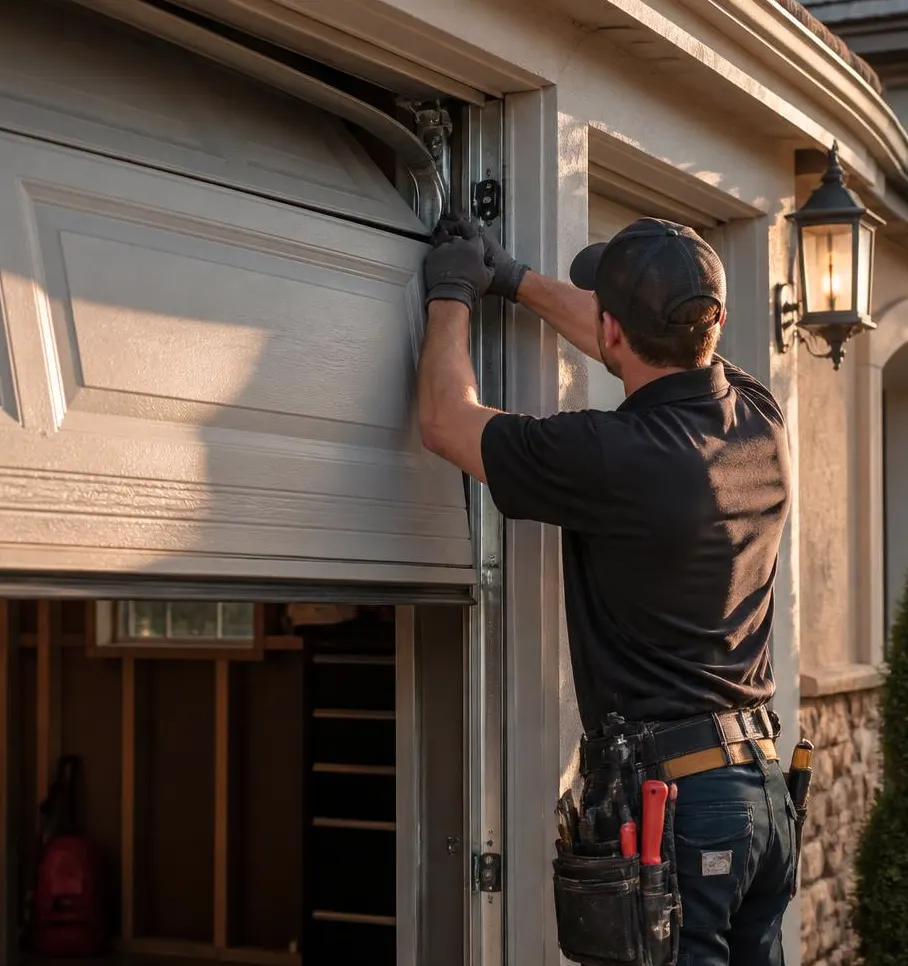
What a Technician Sees This Time of Year
A typical late-fall call starts the same way: the homeowner says the door was fine all summer, and now it's grinding, hesitating, or reversing for no reason. Once the technician gets the panel off or runs the opener through a cycle, the pattern is usually obvious. Months of humidity and salt air have been quietly working on the hardware, and the first cool snap or dry stretch is what finally makes the problem show itself. Springs that were coated in a fine layer of surface rust suddenly sound rough. Rollers that were sluggish from swollen wood or warped tracks start binding. None of this happened overnight — it built up over a humid summer and a stretch of named storms, and winter is when it gets noticed.
Why the Season Change Matters for Your Door
Along the Gulf Coast, winter doesn't mean snow and ice, but it does mean a real shift: lower humidity, cooler nights, and drier air replacing the thick, salt-heavy moisture of summer. That shift affects a garage door system in a few specific ways. Metal that absorbed moisture all summer can now show the rust it was hiding. Wood panels or trim that swelled in the heat may shrink slightly as humidity drops, loosening screws and fasteners. And after a season of tropical systems and heavy wind loads, any hardware that got stressed during a storm may finally fail once temperatures and pressure change. Winter prep here isn't about frost — it's about catching what summer and storm season left behind before it turns into a stuck door or a snapped spring.
1. Inspect Springs for Rust and Fatigue
Torsion and extension springs take the brunt of coastal humidity. Look for flaking rust, pitting, or a spring that looks thinner or stretched in spots compared to the rest of its coil. A spring under tension that's corroded is a safety risk, not just a noise problem — if it's going to break, cold, dry weather is often when it finally does. Don't attempt to replace a spring yourself; the tension involved can cause serious injury. If you see rust or hear a change in sound when the door opens, that's a signal to get it looked at.
2. Check Weatherstripping and the Bottom Seal
The rubber seal along the bottom of the door and the weatherstripping around the frame take a beating from afternoon downpours and salt-laden air all summer. By fall, it's common to find seals that are cracked, flattened, or pulling away from the track. A worn seal doesn't just let in drafts — it lets in water during winter rain events and gives pests an easy way in. Replacing it is inexpensive and straightforward, and it's one of the few garage door jobs a homeowner can reasonably handle solo if the track channel is in good shape.
3. Lubricate Rollers, Hinges, and Tracks
If the door hasn't been serviced since spring, rollers and hinges have likely picked up grit, salt residue, and moisture. A grinding or squealing sound when the door moves is usually this, not the opener. Use a garage-door-specific lithium or silicone lubricant (not household oil, which attracts more dust) on rollers, hinges, and the spring. While you're at it, visually check the tracks for rust spots or small dents — summer storms and wind-load stress can knock tracks slightly out of alignment even if the door still looks like it's working.
4. Test the Opener and Battery Backup
Storm season often means power surges and outages. If your opener has a battery backup, this is the time to test it — a battery that's been drained or degraded by a summer outage may not be ready for the next one. Run the auto-reverse safety test: place a block of wood in the door's path and confirm it reverses on contact. Also check that the photo-eye sensors near the floor are aligned and free of dust or cobwebs, since misalignment is one of the most common reasons doors refuse to close in cooler, drier weather when materials shift slightly.
5. Look Over Panels and Hardware for Storm Damage
Even a storm that didn't cause an obvious problem can leave bent hinges, loosened fasteners, or hairline cracks in panels, especially on doors rated for wind load. Walk the outside of the door and check every hinge and bracket for looseness. Panels that absorbed humidity all summer can also develop soft spots or minor warping that's easier to see once the weather dries out. Catching this now means a simple panel replacement instead of a full door replacement later.
6. Recheck the Door's Balance
Disconnect the opener and manually lift the door halfway. It should stay in place on its own. If it drifts up or falls, the springs are out of balance — often from the same rust and fatigue mentioned above. An unbalanced door puts extra strain on the opener motor, which can shorten its life heading into the year's cooler, drier months when you're less likely to be out in the garage checking on it.
When to Call Precision Garage Door of Santa Rosa Beach
If you're hearing new grinding noises, seeing rust on the springs, or your door isn't balancing correctly, it's time to get a trained eye on it rather than guessing. Our technicians handle Garage Door Maintenance & Tune-Up visits that cover exactly this kind of post-storm-season inspection — springs, rollers, tracks, opener function, and seals — and we handle Garage Door Spring Repair safely when a spring is showing rust, fatigue, or damage from a season of coastal weather. We work throughout Santa Rosa Beach, Destin, Miramar Beach, Freeport, Inlet Beach, Panama City Beach, Niceville, and Defuniak Springs.
Don't wait for a spring to snap on a cold morning. Call Precision Garage Door of Santa Rosa Beach today to get your door checked, tuned up, and ready for winter.